 |
 |
 |
 |
    |
 |
 |
 |
 |







Birch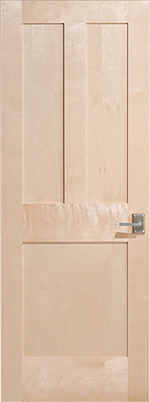
General Information:
Birch does not only give you that warm cozy feeling over the Holidays with it's wonderful fragrance as it burns in the fireplace, but its warm subtle grain patterns and its creamy white colors give your home that same cozy feeling all year round. Lighter colored woods with natural finishes are being used to brighten up the homes interior without losing the charm and warmth that wood adds to your home's interior. It is very similar in color and texture to our maple doors. You may also want to consider using the birch in a mixed species door, it looks great when combined with another species such as cherry to create your own unique door style and design.
Species:
Birch trees are a deciduous tree that shed all of their leaves during one season. It's scientific name is Betula alleghaniensis. Birch trees primarily grow in the Eastern U.S., Northern and Lake states region. The commercially important species of birch are the yellow birch, sweet birch and paper birch. The average tree grows to 60 - 70 feet in height.
Uses:
Birch is a versatile hardwood used in many applications in furniture, cabinets, millwork, doors, boxes, baskets, crates, paneling, veneer, plywood, toothpicks and many other uses. Paper birch is often used for turned products such as spools, bobbins, small handles and toys. Early Americans used the bark for canoe building.
Color Characteristics:
The birch has white sapwood with light to reddish brown heartwood.
Physical Properties:
Birch machines well, has good nail holding and screw holding power, glues well and takes stain very well. It is a hard strong wood with good bending properties.
Finishing:
The birch is a fine textured wood with grain ranging from generally straight to wavy grain. It accepts stain readily and finishes beautifully as well as being an excellent wood for painting. The closed grain provides a great surface for the paint and the hardness of the species makes it more durable than pine. Closed grain woods such as birch, maple, cherry and poplar are 'diffuse-porous' having small dense pores which result in less distinct grain in contrast to 'ring-porous' open grain woods with distinctive grain patterns as in red oak, elm or ash. In general, a nicely sanded surface using multiple grits with a final sanding using 150 grit sandpaper will help to achieve a uniform stain across the whole surface. Some closed grain woods such as birch, cherry and maple may develop finishing blotches which is caused by texture grain which no amount of sanding will remove, its a natural characteristic of the wood itself. Some finish manufacturers recommend the application of a wash coat prior to staining to create a more even appearance. Your finish supplier would be happy to provide you with their recommended finish for your application.
 |
 |
 |
| Door Designs | Panel Types | Wood species | Sizing Options | Photo Gallery | General Info | About Stallion | Contact | Home | ||
| Stallion Doors & Millwork ©2003 This website best viewed using Internet Explorer 6.0 |
||




