 |
 |
 |
 |
    |
 |
 |
 |
 |







Cherry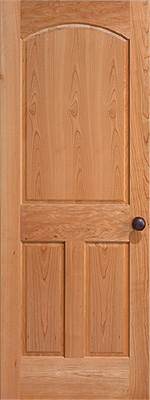
General Information:
Cherry is a well known species, it's popularity goes way back in history to the story of George Washington chopping down the cherry tree. It's fruit makes wonderful cherry pies, and the wood of the cherry tree has been used in making fine furniture for hundreds of years. The rich color of this species only gets better with age, as the door ages in its environment the pinkish brown to rusty red tones get deeper and richer in color that will add unsurpassed beauty to any room in your house. It looks beautiful in a natural clear finish, some people like it stained in a dark cherry stain as was common years ago, either way or anyway in between, cherry adds charm. It also looks very nice with painted trim in the house, it seems to set off the beauty of the cherry wood even more. Cherry also looks very nice with birch or maple when used in a mixed species door. For example you could have a door with birch stile and rails with cherry panels. Mix and match the species any way you would like to create your own unique door to compliment your kitchen cabinets or color scheme of your home.
Species:
Cherry trees are a deciduous tree that shed all of their leaves during one season. It's scientific name is Prunus serotina, and as are all fruit trees, it is a member of the rose family. Cherry trees primarily grow throughout the Midwestern and Eastern U.S. primarily in PA, VA, WV and NY. The average tree grows to 60 - 80 feet in height and can live up to 200 years. In volume it represents just under 4% of commercially available U.S. hardwoods.
Uses:
Cherry is a versatile hardwood used in many applications in fine furniture, cabinets, millwork, doors, paneling, turnings, carvings and many other uses.
Color Characteristics:
The sapwood of cherry is creamy white in color while the heartwood of cherry varies from a rich pinkish red to brown. Cherry is photosensitive and with age and exposure to light the wood will darken into deeper richer looking color. This fine grained wood often has straight grain and naturally contain small dark gum pockets and pith flecks adding to it's character and warm charm.
Physical Properties:
Cherry machines very well, has good nail holding and screw holding power, glues well and takes stain very well. It is a medium density wood with good bending properties.
Finishing:
Cherry is a fine textured wood with grain running generally straight. It accepts stain readily and finishes beautifully. Closed grain woods such as birch, maple, cherry and poplar are 'diffuse-porous' having small dense pores which result in less distinct grain in contrast to 'ring-porous' open grain woods with distinctive grain patterns as in red oak, elm or ash. In general, a nicely sanded surface using multiple grits with a final sanding using 150 grit sandpaper will help to achieve a uniform stain across the whole surface. Some closed grain woods such as birch, cherry and maple may develop finishing blotches which is caused by texture grain which no amount of sanding will remove, its a natural characteristic of the wood itself. Cherry is photosensitive and with age and exposure to light the wood will darken into a deeper, richer looking color. During the construction process, care should be taken to protect the doors from uneven lighting that may lead to un-even color changes across the face of the door. For example, do not leave a door half covered, exposing half of the door to light. The part exposed to the light may turn darker faster than the half that is not exposed to the light.
 |
 |
 |
| Door Designs | Panel Types | Wood species | Sizing Options | Photo Gallery | General Info | About Stallion | Contact | Home | ||
| Stallion Doors & Millwork ©2003 This website best viewed using Internet Explorer 6.0 |
||




