 |
 |
 |
 |
    |
 |
 |
 |
 |







Hickory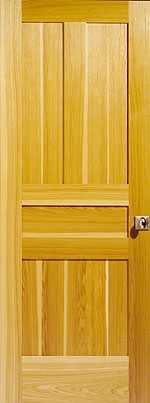
General Information:
This verstile species has been used in a wide variety of applications. It's closed but coarse grain readily takes stain and finishes beautifully. Hickory looks beautiful in a clear finish as well, its natural earthy tones and grain patterns look wonderfully rich in any home setting. It is also a popular species for kitchen cabinets.
Species:
True hickories range typically throughout most of the eastern half of the United States. The main commercial species are comprised of shagbark (Carya ovata), pignut (C. glabra), shellbark (C. laciniosa), and mockernut (C. tomentosa). Many of thh species produce sweet edible nuts with the excetion of the bitternut species. The bitter taste of these nuts are only eaten by squirrels in tough winters when other food is scarce.
Uses:
It's exceptionally strong, tough, heavy and hard and is commonly used in high shock resistant tool handles, ladder rungs, dowels, poles, athletic goods, agricultural implements and furniture. It also adds excellent flavor to meat when hickory chips are used for smoking the meat.
Color Characteristics:
The sapwood of is mostly white ranging to tan, the heartwood ranges from red to brown with inconspicuous fine brown lines. These beautiful contrasting earthy colors are what makes hickory appealing to homeowners.
Physical Properties:
Hickory machines well but is known to dull tools much sooner than certain other hardwoods. After pre-drilling it has good nail holding and screw holding power, its hard and heavy wood lend great wear resistance.
Finishing:
The coarse texture and closed grain of the hickory accepts stain readily and finishes beautifully. The key to a nice finish is in the wood preparation. A nicely sanded surface using multiple grits with a final sanding using 150 grit sandpaper will help to achieve a uniform finish across the whole surface.
 |
 |
 |
| Door Designs | Panel Types | Wood species | Sizing Options | Photo Gallery | General Info | About Stallion | Contact | Home | ||
| Stallion Doors & Millwork ©2003 This website best viewed using Internet Explorer 6.0 |
||




