 |
 |
 |
 |
    |
 |
 |
 |
 |







Mahogany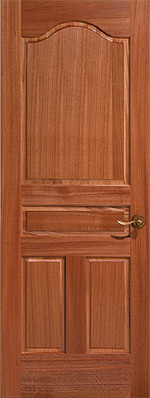
General Information:
Mahogany is a beautiful fine textured wood often used in building fine furniture. Its grain is often ribbon striped and iridescent in the light. Its reddish to rusty brown color will darken with age and exposure to the light giving unsurpassed deep rich wood tones. This species is more commonly used in the Eastern U.S. in higher end homes as well as throughout the U.S. in light commercial applications such as in office buildings and professional clinics.
Species:
African Mahogany or Khaya is from the family Meliaceae. The trees are found primarily throughout east and central Africa. These trees can reach heights of up to 200 feet with boles - straight, cylindrical and clear to 90 feet with trunk diameters of 3 to 6 feet buttressed.
Uses:
Mahogany is used in many applications in furniture, cabinets, millwork, doors, paneling, interior joinery and decorative work along with many other uses.
Color Characteristics:
The sapwood of African mahogany can be a light whitish or yellowish, not always demarcated while the heartwood is a rather uniform light pinkish brown. Mahogany is photosensitive and with age and exposure to light, will darken to a deeper, richer color. This species is most noted for having interlocked grain producing a striped or roey figure.
Physical Properties:
Mahogany machines well but requires extra attention to make sure tools are sharp. It can tend to be slightly fuzzier than other woods and requires extra care in sanding. It has good nail holding and screw holding power and good gluing properties.
Finishing:
It accepts stain readily and finishes beautifully. In general, a nicely sanded surface using multiple grits with a final sanding using 180 grit sandpaper will help to achieve a uniform stain across the whole surface. Mahogany is photosensitive and with age and exposure to light, will darken into a deeper, richer looking color. During the construction process, care should be taken to protect the doors from uneven lighting that may lead to uneven color changes across the face of the door. For example, do not leave a door half covered, exposing one half of the door to light. The part exposed to the light may turn darker faster than the half that is not exposed to light.
 |
 |
 |
| Door Designs | Panel Types | Wood species | Sizing Options | Photo Gallery | General Info | About Stallion | Contact | Home | ||
| Stallion Doors & Millwork ©2003 This website best viewed using Internet Explorer 6.0 |
||




